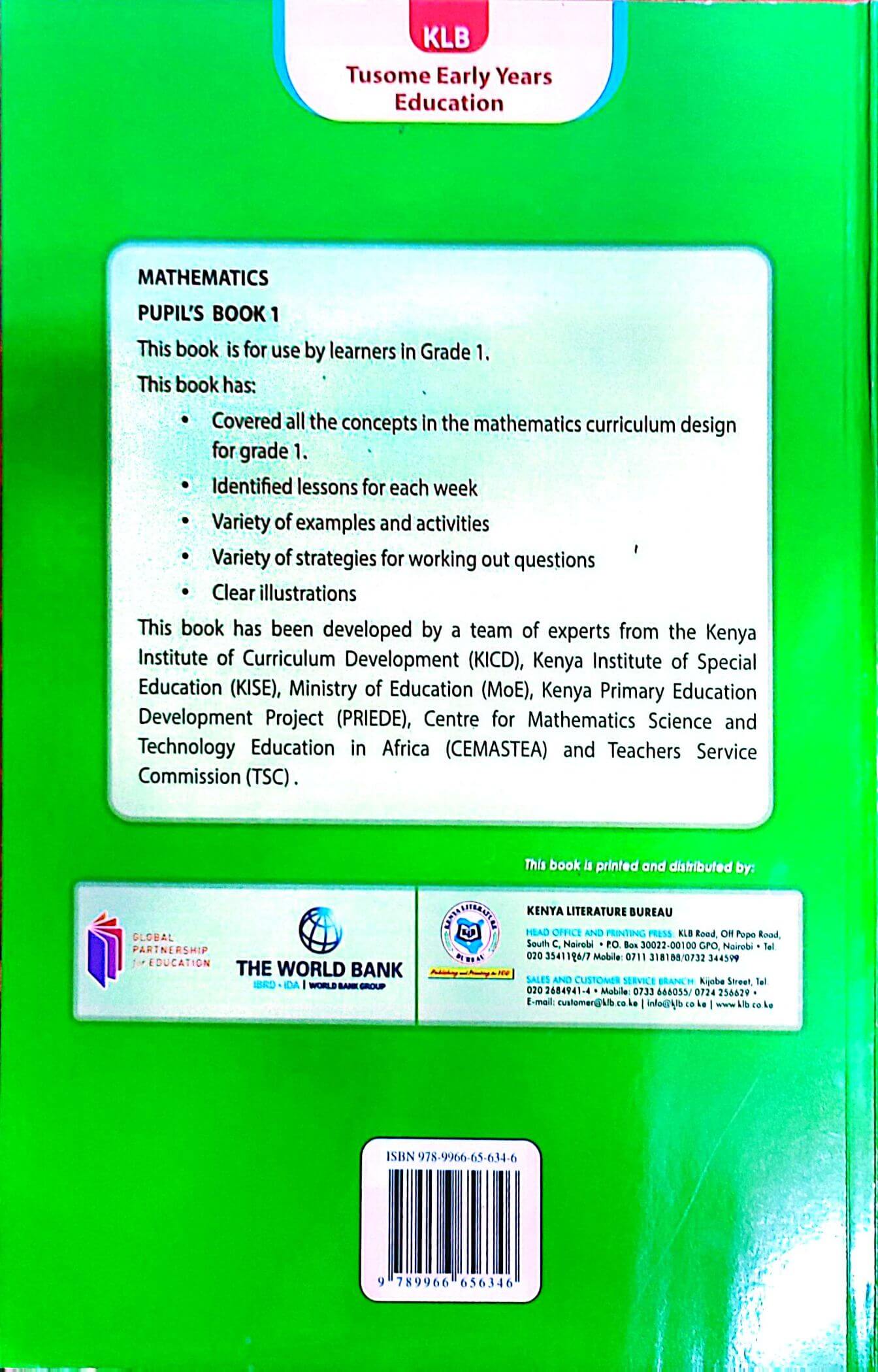
Description
Key Features
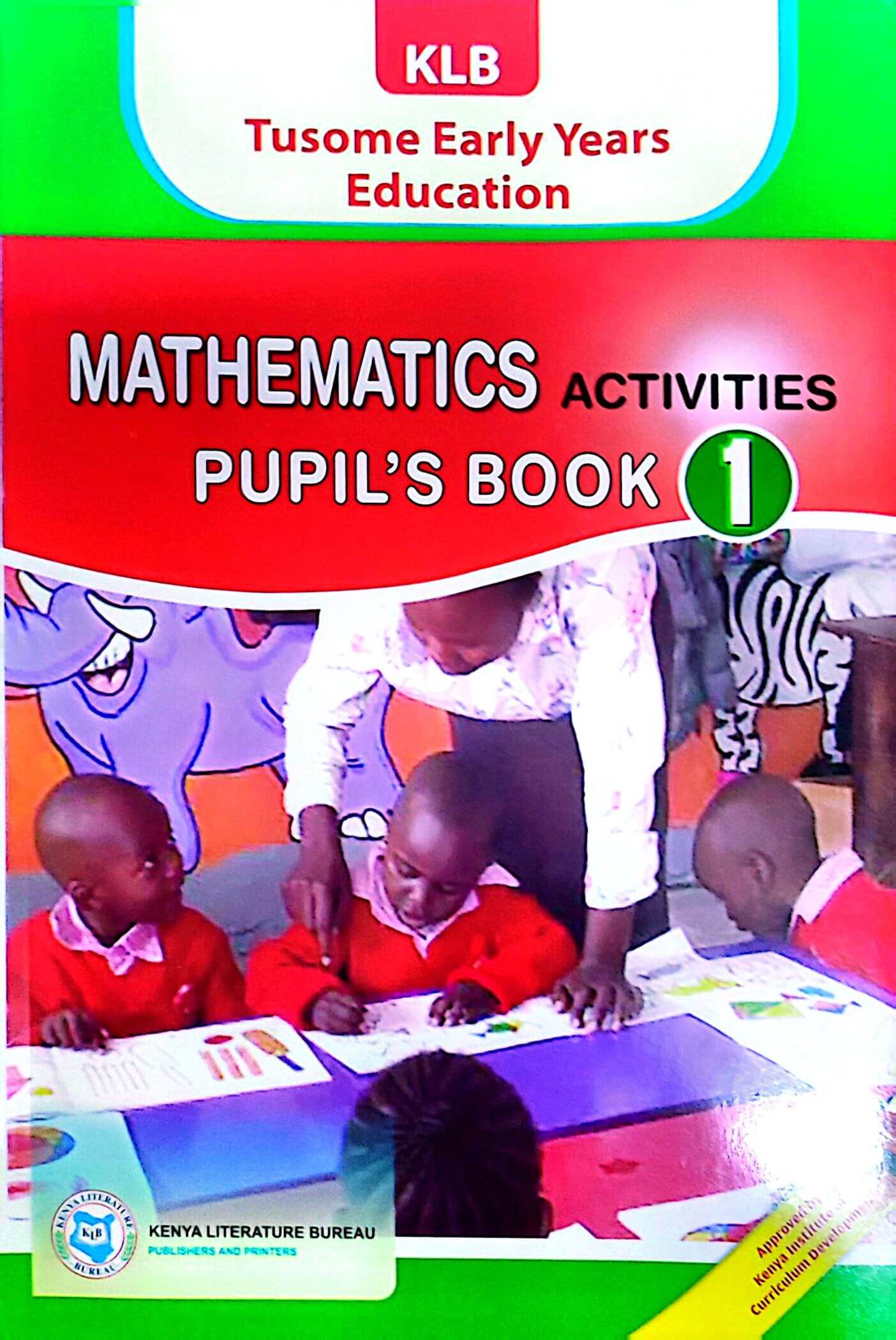
- Activity-Based Learning: The book employs a hands-on, learner-centered approach with a variety of exciting activities, games, discussions, and illustrations to make learning enjoyable.
- Curriculum Alignment: It is fully aligned with the KICD curriculum design for Grade 1 Mathematics, covering all expected learning outcomes and key inquiry questions.
- Real-Life Contexts: Content and examples are drawn from the learner’s immediate environment (home, school, community) to help them relate mathematical concepts to their daily lives.
- Comprehensive Skill Development: Activities are logically sequenced to help learners acquire skills in number recognition, counting, sorting, pattern formation, shapes, sizes, basic
measurements, and simple addition/subtraction. - Inclusivity: The book uses simple, age-appropriate language and includes illustrations that promote inclusivity and cater to learners with different abilities.
- Home-School Link: It includes “Home activity” or “Parent/caregiver engagement” sections to provide a platform for practicing skills outside the classroom.
- Digital Integration: Some versions include digital sections or activities that require learners to use technology to enhance learning and information-seeking skills.
Content Overview
The book covers key strands and sub-strands as per the CBC, including:
- Number Concepts: Sorting and grouping objects by various attributes (size, shape, color), matching and pairing items, ordering and sequencing, and identifying patterns.
- Whole Numbers: Counting forwards and backwards to 100, counting in 2s, 5s, and 10s, identifying place value of ones and tens, and reading and writing numbers in symbols and words.
- Addition and Subtraction: Modeling addition as “putting objects together,” adding 3-single digit numbers, and adding a 2-digit number to a 1-digit number without regrouping.
- Measurements: Comparing length, mass, capacity, time, and money using arbitrary units.
- Geometry: Exploring shapes and spatial relationships in the environment.